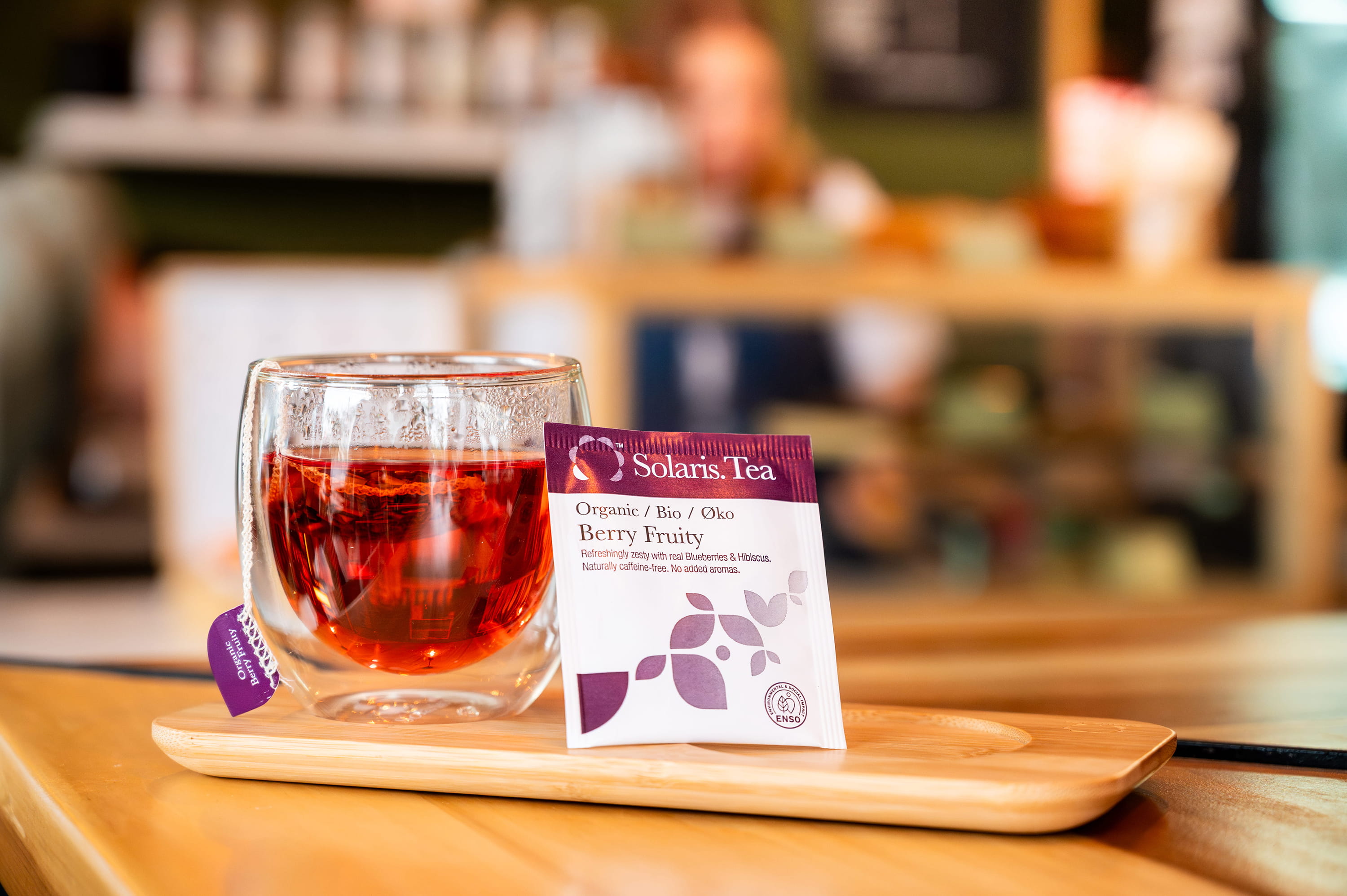

Solaris Botanicals Ltd. T/A Solaris Tea
1.6
County Galway, Ireland
January 2026
Beverages
Manufacturing
Austria,
Belgium,
Czech Republic,
Denmark,
Finland,
France,
Germany,
Ireland,
Italy,
Kosovo,
Kuwait,
Lithuania,
Malta,
Netherlands The,
Poland,
Romania,
Sweden,
Switzerland,
United Arab Emirates,
United Kingdom
Solaris Tea is a family-run business based in Galway on the West of Ireland founded and run by two qualified Medical Herbalists, Jörg & Karin Müller. We specialise in the blending of internationally award-winning Whole Leaf Organic Teas and Herbal Infusions. We also run courses on foraging, herbs, mindfulness and nature re connection from our eco cabin in Rosscahill. Our values are simple: provide the highest quality teas, using exclusively organic materials and ensuring that health, purity and taste are the cornerstones of our blends. Up to date we have won 20 Great Taste Awards. We were awarded the highly commended' category for the Irish Tatler Spa and Wellness Awards 2022 and were featured on the 2022 Faoi Bhláith series on RTE 1 (check us out on RTE player!) a Wildflowers of Ireland and sustainability program. Most recently we won Best Organic Tea & Wellness Brand 2025 from the internationally recognised Seven Stars Awards. Our blends contain no artificial aromas or added 'natural flavours' and consist instead of premium top grade and spring flush teas, herbs and spices - masterfully blended together for an exquisite taste experience. Tea is an experience, and as such, we are proud to present you with a unique offering to take you and your customers on a sensory journey.
Overall B Impact Score
Governance 17.2
Governance evaluates a company's overall mission, engagement around its social/environmental impact, ethics, and transparency. This section also evaluates the ability of a company to protect their mission and formally consider stakeholders in decision making through their corporate structure (e.g. benefit corporation) or corporate governing documents.
What is this? A company with an Impact Business Model is intentionally designed to create a specific positive outcome for one of its stakeholders - such as workers, community, environment, or customers.
Workers 24.1
Workers evaluates a company’s contributions to its employees’ financial security, health & safety, wellness, career development, and engagement & satisfaction. In addition, this section recognizes business models designed to benefit workers, such as companies that are at least 40% owned by non-executive employees and those that have workforce development programs to support individuals with barriers to employment.
Community 19.9
Community evaluates a company’s engagement with and impact on the communities in which it operates, hires from, and sources from. Topics include diversity, equity & inclusion, economic impact, civic engagement, charitable giving, and supply chain management. In addition, this section recognizes business models that are designed to address specific community-oriented problems, such as poverty alleviation through fair trade sourcing or distribution via microenterprises, producer cooperative models, locally focused economic development, and formal charitable giving commitments.
Environment 43.5
Environment evaluates a company’s overall environmental management practices as well as its impact on the air, climate, water, land, and biodiversity. This includes the direct impact of a company’s operations and, when applicable its supply chain and distribution channels. This section also recognizes companies with environmentally innovative production processes and those that sell products or services that have a positive environmental impact. Some examples might include products and services that create renewable energy, reduce consumption or waste, conserve land or wildlife, provide less toxic alternatives to the market, or educate people about environmental problems.
What is this? A company with an Impact Business Model is intentionally designed to create a specific positive outcome for one of its stakeholders - such as workers, community, environment, or customers.
Customers 4.0
Customers evaluates a company’s stewardship of its customers through the quality of its products and services, ethical marketing, data privacy and security, and feedback channels. In addition, this section recognizes products or services that are designed to address a particular social problem for or through its customers, such as health or educational products, arts & media products, serving underserved customers/clients, and services that improve the social impact of other businesses or organizations.